Your cart is currently empty!
Category: Strength Training
-

Half Marathon Training Plan Strength & Endurance Strategy for Combat Athletes in 2025
The ultimate reward for your dedication: crossing the finish line with pride! A half marathon training plan isn’t just about running—it’s about building endurance without sacrificing strength. If you’re a combat athlete, powerlifter, or strength-focused individual, adding a structured half marathon plan to your routine helps develop next-level conditioning, mental toughness, and hybrid athleticism that enhances both fight performance and power output.
Most running programs aren’t designed for those who prioritize strength training. This step-by-step hybrid half marathon training plan teaches you how to train effectively while preserving muscle mass, the ideal mix of endurance and resistance work, and the best strategies for fueling, recovery, and race execution. Whether you’re a fighter, lifter, or hybrid athlete, this plan will ensure you dominate both on the pavement and in the gym.
By following this 12-week half marathon plan, you’ll build aerobic endurance, maintain power, and stay race-ready without losing strength or muscle. Let’s break down exactly how to do it.
This step-by-step half marathon training plan teaches you how to train effectively while preserving muscle mass, the ideal mix of endurance and resistance work, and the best strategies for fueling, recovery, and race execution. Whether you’re a fighter, lifter, or hybrid athlete, this program is designed to optimize your strength and running performance.
The Complete Half Marathon Training & Pace Guide
- Half Marathon Distance, Pace & Average Time
- Half Marathon Pace Calculator
- Traditional Half Marathon Training vs. Strength-Based Hybrid Training
- The Science of Half Marathon Training – Explains lactate threshold
- The Strength Training Plan for a Half Marathon
- Mindset & Motivation: Why Strength Athletes Should Run a Half Marathon
- Half Marathon Race Strategy for Strength Athletes
Half Marathon Distance, Pace & Average Time
A half marathon is 13.1 miles (21.1 km). Whether you’re training for your first race or looking to improve your time, knowing half marathon distance, pace strategies, and finish time expectations is crucial for success. Below is a breakdown of the key insights runners need to prepare effectively.
Half Marathon Finish Times by Experience Level
Experience Level Expected Finish Time Average Pace per Mile Beginner (Run/Walk Strategy) 2:15 – 2:45 hrs 10:15 – 12:35 min/mi Intermediate (Consistent Pacing) 1:45 – 2:15 hrs 8:00 – 10:00 min/mi Advanced (Competitive Runner) Sub-1:45 hrs 7:59 min/mi or faster Key Distance & Pacing Insights
How long is a half marathon in miles? → 13.1 miles
How many kilometers in a half marathon? → 21.1 km
How long does it take to complete a half marathon? → 1:30 – 3:00 hours, depending on experience
What’s the average pace for a half marathon? → 9-11 minutes per mile for most runners
How many steps in a half marathon? → Approx. 20,000 – 25,000 steps, depending on stride length
Half Marathon Pace Calculator: Find Your Race Goal
Using a half marathon pace calculator can help determine your ideal pace per mile or km, ensuring you train effectively and achieve your target race time. To maximize race-day performance, adjust your training runs according to your predicted pace.
By understanding your baseline pace and goal finish time, you can tailor your half marathon training plan for optimal endurance, speed, and race execution.
A half marathon covers 13.1 miles (21.1 km). Understanding pacing and expected finish times helps you set a realistic goal based on your experience level.
Half Marathon Pace Calculator Half Marathon Pace Calculator
Enter your target finish time to calculate your pace per mile/km.
VO2 Max Calculator
Enter your race time and distance to estimate your VO2 Max.
Half Marathon Training Plan: 12 Weeks for Strength & Endurance
Successfully training for a half marathon requires more than just logging miles—it’s about following a structured, progressive plan that builds endurance, speed, and strength while preventing injuries. This 12-week training plan is designed specifically for combat athletes, strength-focused individuals, and runners who want to maximize performance without sacrificing power.
By breaking the training into three key phases, this plan ensures that you gradually increase mileage, improve your pace, and stay race-ready while integrating strength workouts. Below, you’ll find a week-by-week breakdown to help you prepare effectively for race day success.
Best Training Strategies for Endurance, Speed & Strength
This half marathon training plan is built on a foundation of progressive endurance work, structured speed development, and strategic strength maintenance. Unlike traditional running programs, this approach ensures you maintain muscle, develop running efficiency, and prepare for race day with a complete training framework.

Strength training builds the foundation for power and endurance in half marathon training. The Three Pillars of Half Marathon Training
Endurance Progression – Build your ability to sustain effort over 13.1 miles while preventing fatigue.
Speed & Race-Specific Work – Improve pace control, running economy, and aerobic efficiency.
Strength & Injury Prevention – Maintain power, protect joints, and prevent muscle loss.
By integrating these components, you will maintain power while improving race performance and reducing injury risk. The following section provides a 12-week structured training plan, broken into progressive phases to ensure optimal adaptation.
Weeks 1-4: Aerobic Foundation & Strength Adaptation
Running: 3x per week (Easy Runs + Long Run)
Strength: 2-3x per week (Heavy Lifts + Explosive Movements)
Weeks 5-8: Power & Speed Development
Running: 3x per week (Interval Work + Race Pace Runs)
Strength: 2x per week (Plyometrics, Functional Strength)
Weeks 9-12: Race Preparation & Strength Maintenance
Running: 3x per week (Tapering, Race Pace Repeats)
Strength: 1-2x per week (Low-Volume, High-Intensity Maintenance)
The Strength Training Plan for a Half Marathon
To preserve muscle and boost endurance, this half marathon training plan incorporates the Core 4 Hybrid Strength System:
Power Phase (30-sec explosive bodyweight movement)
Box Jumps, Plyo Push-Ups, Sprint Starts
Strength Phase (Bulletproof muscle group focus)
4-6 reps of compound lifts (Squats, Deadlifts, Overhead Press)
Hybrid Strength-Endurance Phase (Dumbbell/Kettlebell Work)
15 reps, submax loads, drop sets
Endurance Power Phase (Low Recovery, High Rep Squats)
Squats @ 50-60% 1RM, 12-25 reps, 6 rounds, low rest
Traditional Half Marathon Training vs. Strength-Based Hybrid Training
Traditional Half Marathon Training: How Most Runners Prepare
Traditional half marathon training plans typically follow a gradual mileage progression, emphasizing endurance and race-day preparedness. These plans are designed for runners who prioritize aerobic capacity over strength and focus primarily on consistent long runs, tempo efforts, and recovery runs to build stamina.
Core Components of Traditional Half Marathon Training

Cross the finish line with strength and confidence—our hybrid half marathon training plan helps you achieve peak performance. Weekly Long Runs – Traditional plans emphasize progressive long runs each week, gradually increasing distance to 10-12 miles before tapering. These long runs are typically done at a comfortable pace to build endurance.
Steady-State & Tempo Runs – Mid-week workouts include tempo runs, which are faster-paced efforts meant to improve lactate threshold and sustained speed. These are typically run at 80-90% of maximum effort.
Interval & Speed Work – Short bursts of high-intensity running, such as 400m or 800m repeats, help improve foot turnover and race pace. Traditional runners incorporate track workouts to build aerobic efficiency.
Easy Runs & Recovery Days – Runners in traditional plans maintain low-intensity recovery runs on non-key workout days to reduce fatigue while keeping mileage high. These runs typically range from 3-6 miles at a conversational pace.
Tapering Before Race Day – The last 2-3 weeks focus on reducing mileage while maintaining intensity, ensuring runners are well-rested but still primed for race day performance.
Limitations of Traditional Training for Strength Athletes
While effective for endurance, traditional half marathon training does not prioritize strength or power retention. For combat athletes, powerlifters, or hybrid athletes, excessive mileage and high-volume aerobic work can lead to:
Muscle Loss & Strength Reduction – Traditional plans do not account for strength training maintenance, leading to reduced power output.
Overuse Injuries – High-mileage training without resistance work can lead to shin splints, knee pain, and hip imbalances.
Lack of Explosive Power – While endurance improves, the ability to generate quick bursts of speed or force declines due to insufficient anaerobic training.
Bridging the Gap: Hybrid Half Marathon Training for Strength & Endurance
While traditional plans work well for dedicated distance runners, hybrid training approaches allow athletes to retain strength, improve endurance, and enhance race-day performance. The next section details how to integrate strength, power, and conditioning into a half marathon plan that prioritizes both endurance and strength goals.
This half marathon training plan is built on a foundation of progressive endurance work, structured speed development, and strategic strength maintenance. Unlike traditional running programs, this approach ensures you maintain muscle, develop running efficiency, and prepare for race day with a complete training framework.
The Three Pillars of Half Marathon Training
Endurance Progression – Build your ability to sustain effort over 13.1 miles while preventing fatigue.
Speed & Race-Specific Work – Improve pace control, running economy, and aerobic efficiency.
Strength & Injury Prevention – Maintain power, protect joints, and prevent muscle loss.
By integrating these components, you will maintain power while improving race performance and reducing injury risk. The following section provides a 12-week structured training plan, broken into progressive phases to ensure optimal adaptation.
Weeks 1-4: Aerobic Foundation & Strength Adaptation
Running: 3x per week (Easy Runs + Long Run)
Strength: 2-3x per week (Heavy Lifts + Explosive Movements)
Weeks 5-8: Power & Speed Development
Running: 3x per week (Interval Work + Race Pace Runs)
Strength: 2x per week (Olympic Lifts, Plyometrics, Functional Strength)
Weeks 9-12: Race Preparation & Strength Maintenance
Running: 3x per week (Tapering, Race Pace Repeats)
Strength: 1-2x per week (Low-Volume, High-Intensity Maintenance)
The Science of Half Marathon Training: Lactate Threshold & Performance Adaptations
Understanding the Role of Lactate Threshold in Half Marathon Performance
Half marathon training isn’t just about increasing mileage—it’s about optimizing your body’s ability to sustain effort. One of the most critical factors influencing endurance performance is lactate threshold (LT)—the point at which lactic acid begins accumulating in the blood faster than it can be cleared.
Why Lactate Threshold Matters
Higher lactate threshold = Better endurance performance
Allows you to maintain faster paces without fatigue
Enhances muscular efficiency and energy utilization
Essential for strength-based athletes adapting to endurance training
Lactate Threshold Training Methods for Half Marathon Runners
Training Method Purpose Example Workout Tempo Runs Improves ability to sustain race pace 4-5 miles at 80-90% max effort Threshold Intervals Boosts LT by gradually increasing stress 4 x 1-mile at 85-90% max effort w/ 1 min rest Progression Runs Teaches pacing and energy conservation Start slow, increase pace every mile Hill Sprints Increases muscle efficiency and lactate clearance 6-8 sprints of 30s uphill efforts By training at or just above lactate threshold, runners can increase stamina, maintain speed longer, and delay fatigue—a key strategy for both traditional endurance runners and strength athletes transitioning into half marathon preparation.
Half Marathon Nutrition Plan: Fueling Strength Athletes for Endurance & Performance
Why Nutrition Matters for Strength Athletes Running a Half Marathon
Fueling properly for a half marathon training plan is just as important as the mileage and workouts themselves. For combat athletes and strength-focused individuals, energy demands are different from those of traditional endurance runners. More muscle mass requires higher glycogen stores, precise hydration, and strategic nutrient timing to sustain performance without sacrificing strength or power.
Understanding the nutritional needs for hybrid training ensures that your body gets the right balance of carbohydrates, protein, fats, and electrolytes to support recovery, prevent muscle loss, and optimize endurance capacity.
Carb-Loading & Pre-Race Nutrition: The Essential Strategy
Carb-loading is a key strategy used by runners to maximize glycogen storage before race day. However, strength athletes need to adjust this approach to avoid excessive fatigue, bloating, or unnecessary weight gain.
1 Week Out: Increase complex carbs (sweet potatoes, rice, quinoa, oats) to top off glycogen stores gradually.
3-4 Days Out: Begin tapering strength workouts while maintaining daily carb intake.
2 Days Out: Reduce training volume and increase carbohydrate intake by 20-30%, ensuring muscle glycogen is fully stocked.
Race Day Morning: Consume easily digestible carbs (banana, toast, honey, oatmeal), ensuring fuel is available for immediate energy use without digestive discomfort.
During the Race: Supplement with mid-race fueling (gels, chews, electrolyte drinks) at mile 5, 9, and 11 to sustain performance.
Hydration & Electrolyte Strategy for Strength-Based Runners
Proper hydration is critical for preventing muscle cramps, fatigue, and performance drops—especially for athletes balancing high-intensity strength training with endurance running.
Daily Hydration Needs: Aim for 3-4L of water per day to maintain fluid balance.
Pre-Run Hydration: Drink 16-20 oz of water 1-2 hours before a run.
During Runs: Consume 500-700mg of sodium per hour via electrolyte drinks to replace lost minerals.
Post-Run Recovery: Restore hydration levels with electrolyte-rich fluids and protein to support muscle repair and glycogen replenishment.
Protein & Recovery Nutrition: Preventing Muscle Loss While Running
While traditional runners may not prioritize protein intake, strength athletes require consistent protein consumption to maintain muscle mass and aid recovery.
Daily Protein Target: 0.8-1.2g per pound of body weight to prevent muscle breakdown.
Post-Run Recovery Meal: Combine 30-40g protein with fast-digesting carbs (white rice, fruit, honey, potatoes) to accelerate muscle repair and glycogen replenishment.
Best Recovery Foods: Lean meats, eggs, Greek yogurt, protein shakes, and fast-digesting carbs.
How to Adjust Nutrition Based on Training Phase
Your nutritional strategy should align with your training intensity and mileage progression throughout the 12-week half marathon training plan:
Training Phase Carb Intake Focus Protein Needs Hydration Priority Weeks 1-4 (Base Building) Moderate carbs for adaptation 1.0g per lb BW Standard hydration (3L/day) Weeks 5-8 (Speed & Strength Phase) Higher carb intake for energy 1.2g per lb BW Increased electrolytes Weeks 9-12 (Race Taper & Peak Performance) Carb-loading pre-race Maintain protein for muscle retention Dialed-in hydration before race Mindset & Motivation: Why Strength Athletes Should Run a Half Marathon
The Psychological & Physical Benefits of Half Marathon Training
For combat athletes and strength trainers, running a half marathon isn’t just about endurance—it’s about mental toughness, discipline, and resilience. Pushing past physical limits in endurance training translates directly into performance benefits in combat sports, weightlifting, and overall fitness.
Why Strength Athletes Benefit from Half Marathon Training
Increases Mental Grit – Teaches pain tolerance, perseverance, and focus.
Boosts Work Capacity – Improves overall cardiovascular endurance, leading to faster recovery between strength sets.
Expands Athletic Versatility – Trains the body to be efficient across multiple energy systems.
Challenges Comfort Zones – Running long distances forces strength athletes to embrace new movement patterns and challenges.
Who Should Train for a Half Marathon?
✅ Combat athletes looking to expand their endurance without losing explosiveness.
✅ Strength athletes who want to increase aerobic capacity for better overall performance.
✅ Hybrid athletes aiming for an elite balance of power and endurance.
✅ Anyone seeking a mental and physical challenge beyond the weight room.Who Should Reconsider Half Marathon Training?
🚫 Athletes in a strength-building phase who cannot afford significant endurance adaptations.
🚫 Powerlifters prioritizing maximal strength gains with no need for endurance.
🚫 Individuals recovering from injuries that limit long-duration movement.A half marathon is more than just a race—it’s a test of mental toughness, athletic ability, and high-performance conditioning. The next section will detail how to execute the perfect race strategy for strength athletes balancing endurance and power.
Half Marathon Race Strategy for Strength Athletes
Pacing for Strength-Based Runners
Start Controlled: First 3 miles should be conversational pace.
Mid-Race Push: Miles 4-9 should settle into a steady, strong pace.
Final Kick: Last 4 miles = negative split attack mode.
Mindset & Tactical Race Execution
Break the Race Into Sections – 3×4-mile segments make it mentally easier.
Use Mantras & Visualization – “Strong strides,” “Every step is power.”
Energy Management – Take gels/electrolytes strategically at mile 5, 9, 11.
Avoid These Half Marathon Training Mistakes
🚫 Overtraining & Muscle Loss – Follow strength-focused endurance training.
🚫 Ignoring Nutrition – Fuel like an athlete, not just a runner.
🚫 Skipping Recovery – Sleep, mobility, and active recovery are essential.
🚫 Going Out Too Fast – Stick to a negative split strategy.
The finish line isn’t just a goal—it’s a milestone in your journey to mastering endurance and strength. In Closing…
The Ultimate Half Marathon Plan for Strength Athletes
Running a half marathon as a strength athlete isn’t just about crossing the finish line—it’s about defying limits, embracing discomfort, and pushing beyond what you thought was possible. By following this structured hybrid training plan, you can develop the endurance of a runner without sacrificing the power of a lifter.
Training for and completing a 13.1-mile race is an achievement that challenges both your physical resilience and mental toughness. Along the way, you’ll discover a new level of discipline, refine your ability to handle pain and fatigue, and enhance your overall athleticism in ways that translate to all aspects of performance.
For fighters, lifters, and hybrid athletes, this training is more than just running—it’s about expanding your capacity for intensity, work rate, and performance. The ability to maintain composure under fatigue, push when your body screams to stop, and sustain effort past the breaking point is what separates the elite from the average.
If you’ve ever thought, “I’m not a runner”, let this be the moment where you redefine what’s possible. Whether you’re training to fight, lift, or simply test your own limits, the half marathon is the proving ground for those who are willing to embrace the challenge.
FAQ Section
Most strength athletes can train for a half marathon in 8-12 weeks, depending on their starting endurance level. If you’re new to running, allow 12+ weeks for a safe progression.
Yes, but it requires strategic programming. Stick to 2-3 strength sessions per week with lower volume but higher intensity, focusing on compound lifts.
Not necessarily. Focus on fueling properly and maintaining muscle mass instead of cutting weight. A minor 1-2% body weight reduction for endurance gains is fine, but drastic cuts will hurt performance.
Early phase (Weeks 1-6): 3x per week, focusing on full-body strength and endurance lifts.
Mid-phase (Weeks 7-10): 2-3x per week, reducing volume but keeping intensity high.
Final phase (Weeks 11-12): 1-2x per week, shifting towards maintenance and race readiness.
Beginner lifter-runner: 2:30 – 3:00 hrs
Intermediate hybrid athlete: 1:50 – 2:30 hrs
Advanced strength-endurance athlete: 1:45 or faster
Maintain strength work (compound lifts, heavy loads, 2x per week).
Increase protein intake to 1.2-1.5g per pound of body weight.
Use strategic recovery meals after long runs to prevent catabolism.
Yes, but it’s harder. Strength-based athletes should focus on interval work, tempo runs, and progression running to build endurance without excessive mileage.
2-3x per week early on, tapering to 1-2x near race day.
Resources
coachjohanncscs.com only uses primary research and scholarly studies as references over secondary sites. Other references are primarily from reputable social media accounts of experts only in the fields of health, nutrition, sports science, physiology, psychology, and physical therapy.
Mijaica, R., et al. (2024). Evaluating the effectiveness of the annual physical training plan for Masters+ 45 women half marathon athletes. Sports, 12(9), 256.
🔗 URL: https://www.mdpi.com/2075-4663/12/9/256Nikolaidis, P., et al. (2023). Participation and performance characteristics in half-marathon run: A brief narrative review. Journal of Muscle Research and Cell Motility.
🔗 URL: https://link.springer.com/content/pdf/10.1007/s10974-022-09633-1.pdfLlanos-Lagos, C., et al. (2024). The effect of strength training methods on middle-distance and long-distance runners’ athletic performance: A systematic review with meta-analysis. Sports Medicine.
🔗 URL: https://link.springer.com/content/pdf/10.1007/s40279-024-02018-z.pdfManfredi, M., et al. (2018). Can half-marathon affect overall health? The yin-yang of sport. Journal of Proteomics.
🔗 URL: https://www.academia.edu/download/85933081/j.jprot.2017.09.00420220514-1-9qkmwg.pdfEsteve-Lanao, J., et al. (2021). Predicting recreational runners’ marathon performance time during their training preparation. Journal of Strength and Conditioning Research.
🔗 URL: https://www.researchgate.net/profile/Daniel-Boullosa/publication/332913085_Predicting_Recreational_Runners’_Marathon_Performance_Time_During_Their_Training_Preparation/links/5d225943299bf1547ca1acb9/Predicting-Recreational-Runners-Marathon-Performance-Time-During-Their-Training-Preparation.pdfGattoni, C., et al. (2021). The effect of mental fatigue on half-marathon performance: A pragmatic trial. Sport Sciences for Health.
🔗 URL: https://link.springer.com/article/10.1007/s11332-021-00792-1Nikolaidis, P., et al. (2019). Muscle strength and flexibility in male marathon runners: The role of age, running speed, and anthropometry. Frontiers in Physiology, 10, 1301.
🔗 URL: https://www.frontiersin.org/articles/10.3389/fphys.2019.01301/fullFu, S., et al. (2021). Effect of daily oral Lactobacillus plantarum PS128 on exercise capacity recovery after a half-marathon. Nutrients, 13(11), 4023.
🔗 URL: https://www.mdpi.com/2072-6643/13/11/4023Cogliati, M., et al. (2020). Half marathon induces changes in central control and peripheral properties of individual motor units in master athletes. Journal of Electromyography and Kinesiology, 54, 102437.
🔗 URL: https://www.sciencedirect.com/science/article/pii/S1050641120301140
Related Posts
Johann CSCS November 5, 2025Johann CSCS September 7, 2025Johann CSCS July 13, 2025 -

Advanced Shoulder Recovery: Exercises and Tips for Resilient Joints

The Ultimate Guide to Shoulder Recovery for Fighters and Athletes and Active
Shoulder pain is common among athletes and active individuals due to overuse and poor recovery practices. For fighters and athletes, shoulder health is paramount. The shoulders are one of the most mobile and versatile joints in the body, but they’re also among the most injury-prone due to their complexity and the repetitive demands placed on them. If you’ve been training, competing, or just staying active for years, chances are you’ve experienced some form of shoulder discomfort.
This post, paired with an exclusive video tutorial, dives deep into actionable recovery methods that go beyond conventional advice. These methods are tailored for fighters and athletes, emphasizing scapular stability, rotator cuff strength, and advanced recovery techniques to ensure you’re not just recovering but building bulletproof shoulders for the long term.
Common Causes of Shoulder Injuries
Video: Shoulder Health Secrets: 5 Best Exercises for Strength & Recovery
Shoulder injuries are prevalent in active populations, particularly fighters and martial artists. Here’s why:
- Repetitive Overuse: Throwing punches, grappling, and weightlifting place continuous stress on the shoulder joints.
- Imbalances in Strength: Overdeveloped chest or anterior muscles can lead to poor scapular movement.
- Poor Scapular Stability: Weak or inactive scapular muscles fail to support the shoulder joint effectively.
- Improper Warm-Ups and Recovery: Skipping prehab exercises or recovery protocols exacerbates injury risks.
Statistics highlight the gravity of the problem:
- Overuse Injuries: Account for 29% of shoulder-related issues in athletes.
- Rotator Cuff Tears: Affect 15-20% of people engaged in high-impact sports by the age of 40.
- Instability Injuries: Fighters are particularly prone, with over 30% reporting scapular dyskinesis symptoms.
For fighters, the shoulder is a critical joint, absorbing the impact of punches, grapples, and other high-stress movements. Recognizing the common causes of injury helps target recovery strategies effectively.
The Six Pillars of Shoulder Recovery
To recover and strengthen your shoulders, you need a multifaceted approach. Below are the six pillars, explained with practical applications:
1. Rotator Cuff Exercises for Fighters and Athletes
The rotator cuff stabilizes the shoulder joint during movement. Proper activation is critical:
Exercises: Internal and external rotations with resistance bands.
Tip: Perform light, controlled movements to avoid overloading the joint.
Strong rotator cuffs are essential for absorbing impact and maintaining shoulder integrity during repetitive motions like punching or grappling.
2. Scapular Stability Training for Shoulder Health
Healthy shoulders start with stable scapulae. Focus on strengthening these stabilizers:
Exercises: Scapular punches, Ys, Ts, and Ws.
Pro Tip: Ensure full scapular protraction and retraction for maximum range of motion.
Scapular stability is especially crucial for fighters, as a stable scapula allows for more powerful punches and better injury prevention.
3. Optimizing Posture to Prevent Shoulder Injuries
Rounded shoulders and forward head posture often lead to impingements. Fixing posture involves:
Drills: Wall angels and band pull-aparts.
Purpose: Align the shoulder girdle for optimal function.
For athletes, proper posture reduces unnecessary strain on the shoulders and improves overall biomechanics.
4. Eccentric Training for Stronger Tendons
Tendons require progressive loading to adapt and strengthen:
Method: Eccentric exercises, such as slow, controlled push-ups and rows.
Why It Works: Eccentrics build resilience in tendons and reduce injury risks.
Eccentric exercises are invaluable for fighters who experience chronic tendon overuse from high-intensity training.
5. How Blood Flow Restriction Accelerates Recovery
Blood flow restriction (BFR) training has emerged as a groundbreaking method for muscle recovery and growth, especially for fighters and athletes recovering from shoulder injuries.
Science-Backed Benefits: Studies show BFR can increase muscle hypertrophy by 20-30% compared to traditional low-load exercises, even with weights as light as 20-30% of your one-rep max. By restricting venous return while maintaining arterial flow, BFR creates a metabolic environment that accelerates recovery and muscle adaptation.
Practical Application: Apply BFR bands at 50% tightness during lightweight exercises like rows or external rotations. For example, performing 4 sets of 30, 15, 15, and 15 reps with minimal rest (30 seconds) between sets can maximize muscle activation without overloading injured joints.
Key Advantages: BFR reduces mechanical stress on healing tissues while still promoting strength gains. It’s particularly effective for addressing atrophy in the rotator cuff and improving blood circulation to the scapular muscles.
Cautionary Notes: Ensure proper application to avoid arterial blockage. Work with a professional to determine the correct pressure for safe and effective use.
For fighters and athletes, BFR offers a way to maintain and even enhance shoulder strength during periods of limited training capacity, making it a powerful tool in the recovery arsenal.
6. Neuromuscular Training to Build Better Shoulder Control

The anatomy of the shoulder, showcasing its complex structure and the importance of targeted recovery and strengthening exercises. Training the mind-muscle connection improves coordination and performance:
Technique: Focus on slow, deliberate contractions during scapular exercises.
Example: Plank protraction and retraction drills.
Building neuromuscular pathways ensures better control and reduces the likelihood of reinjury.
Advanced Recovery Techniques: Scapular Punching and Eccentric Push-Ups
Improve Power with Scapular Punching for Fighters
This technique mimics the motion of a punch while emphasizing scapular protraction and retraction. Fighters can improve punch strength and range of motion:
How to Perform: Extend your arm fully, protract your scapula, then retract as you pull back.
Benefits: Increased scapular mobility, enhanced punch accuracy, and reduced injury risks.
Scapular punching also improves shoulder durability by reinforcing movement patterns directly relevant to combat sports.
Strengthen Shoulders with Eccentric Push-Ups
Eccentric training builds tendon strength and joint control:
Steps: Lower yourself slowly during the push-up, maintaining proper scapular alignment.
Pro Tip: Use knees for support initially to focus on control.
Eccentric push-ups are an excellent tool for rehabilitating overused or weakened shoulder tendons.
Key Exercises for Shoulder Recovery
Exercise Target Area Purpose Scapular Punching Scapula Improves mobility and punch mechanics Ys, Ts, Ws Upper Back, Rotator Cuff Enhances scapular stability Eccentric Push-Ups Pectorals, Scapula Strengthens tendons and joint control Band External Rotations Rotator Cuff Activates stabilizers and improves ROM BFR Rows Serratus Anterior Boosts recovery and muscle hypertrophy
performing a pull-up with a resistance band, a key exercise for improving shoulder strength and stability. In Closing…
Strong shoulders aren’t just about recovery—they’re about dominating in your sport and crushing every workout. Fighters, athletes, and anyone who trains hard know that if your shoulders fail, everything else suffers. The exercises and methods in this guide don’t just help you heal—they future-proof your body so you can train harder, fight longer, and keep going when others break down.
Don’t wait for injury to slow you down. Take control of your shoulder health now. Whether you’re bouncing back from damage or trying to stay one step ahead, these strategies will keep you stronger, longer.
Want to push this even further? My exclusive video tutorials and personalized plans are built to help you not just recover but dominate. Dive into our premium library, and let’s take your shoulders—and your game—to the next level. It’s time to stop holding back and start moving forward.
FAQ Section
Recovery varies, but with consistent exercises, most minor injuries improve within 6-8 weeks. Chronic issues may take longer and require professional guidance.
es, when done correctly. Eccentrics help strengthen tendons and improve joint control but should be performed under supervision if pain persists.
Absolutely. Prioritizing scapular stability, rotator cuff strength, and proper warm-ups reduces the likelihood of injuries.
Poor posture places excessive stress on the shoulder joints, leading to impingements and instability. Correcting posture is crucial for recovery and performance.
A: BFR promotes muscle growth and recovery using low loads, making it ideal for injured shoulders that cannot handle heavy weights.
Resources
coachjohanncscs.com only uses primary research and scholarly studies as references over secondary sites. Other references are primarily from reputable social media accounts of experts only in the fields of health, nutrition, sports science, physiology, psychology, and physical therapy.
DeFroda, S. F., Goyal, D., Patel, N., Gupta, N., & Mulcahey, M. K. (2018). Shoulder instability in the overhead athlete. Current Sports Medicine Reports, 17(6), 264–270. https://journals.lww.com/acsm-csmr/FullText/2018/09000/Shoulder_Instability_in_the_Overhead_Athlete.10.aspx
Kisner, C., & Colby, L. A. (2017). Therapeutic exercise: Foundations and techniques (7th ed.). F.A. Davis Company. https://books.google.com/books?hl=en&lr=&id=z2dhmzP526YC&oi=fnd&pg=PA147
Liebenson, C. (2014). Functional training handbook. Lippincott Williams & Wilkins. https://books.google.com/books?hl=en&lr=&id=ElAtBAAAQBAJ&oi=fnd&pg=PR11
Malliaras, P., Barton, C. J., Reeves, N. D., & Langberg, H. (2013). Achilles and patellar tendinopathy loading programmes: A systematic review comparing clinical outcomes and identifying potential mechanisms for effectiveness. Sports Medicine, 43(4), 267–286. https://link.springer.com/article/10.1007/s40279-013-0019-z
Hughes, L., Paton, B., Rosenblatt, B., Gissane, C., & Patterson, S. D. (2017). Blood flow restriction training in clinical musculoskeletal rehabilitation: A systematic review and meta-analysis. British Journal of Sports Medicine, 51(13), 1003–1011. https://bjsm.bmj.com/content/51/13/1003
Shanahan, C. J., Hodges, P. W., Wrigley, T. V., & Bennell, K. L. (2017). Neuromuscular adaptations to hip exercises in people with and without patellofemoral pain. Medicine & Science in Sports & Exercise, 49(12), 2437–2445. https://journals.lww.com/acsm-msse/Fulltext/2017/12000/Neuromuscular_Adaptations_to_Hip_Exercises_in.9.aspx
-

Strength Calculator: Achieve Your Lifting Goals with Precision

Strength Calculator: Get to Your Lifting Goals with Precision
Strength Performance Calculator
Instant 1RM & Strength Standards**
• Calculate your true 1RM for bench, squat, deadlift & overhead press
• See your strength-to-weight ratio at a glance
• Get a free, goal-driven training plan for power, hypertrophy, enduranceResults:
Estimated One Rep Maximum (1RM):
Strength-to-Bodyweight Ratio:
Adjusted Strength Standard:
Here are your goals for different energy systems:
Max Strength (1–3 Reps at 90%):
Hypertrophy (8–12 Reps at 75%):
Endurance (12–20 Reps at 60%):
Plan Your Training Cycle
Training Recommendations:
Why a Strength Performance Calculator Matters
If you’re tired of guessing your limits and training without a clear roadmap, you’re not alone. Progress in fitness isn’t just about sweating buckets—it’s about making measurable gains in strength, endurance, and performance. That’s where the Strength Performance Calculator comes in, bridging the gap between effort and efficiency.
This isn’t just another tool for estimating a one-rep max (1RM). It’s a comprehensive, goal-driven platform designed to deliver actionable insights for every type of lifter. Whether you’re just stepping into the gym or aiming to crush your next powerlifting meet, this tool helps you understand where you stand and how to elevate your game.
What Makes the Strength Performance Calculator a Game-Changer?
This calculator is more than a number-cruncher. It’s your guide to better performance, offering insights tailored to your unique needs.
1. One-Rep Max (1RM) Calculation
Using the Epley Formula and my 21 years of inside-the-gym-proven methodologies, the calculator estimates your maximum lift for a single rep with precision. Input your weight lifted, reps performed, and body weight to get an accurate snapshot of your potential.
2. Strength-to-Weight Ratio
Your 1RM alone doesn’t define your strength. By comparing your performance to your body weight, the calculator provides context and benchmarks to help you measure progress against recognized standards.
3. Personalized Training Recommendations
Gone are the days of generic advice. The calculator offers tailored training strategies based on your primary goal:
Power: For short, explosive bursts.
Strength: For maximum lifting capacity.
Hypertrophy: For building muscle size.
Endurance: For sustained performance over time.
Each goal comes with specific recommendations for weights, reps, and sets, ensuring every workout moves you closer to your target.
4. Dynamic Performance Standards
The calculator doesn’t just stop at giving you numbers. It dynamically benchmarks your performance against recognized standards for key lifts:
Bench Press: 1.1x body weight (male), 0.9x (female).
Deadlift: 2.0x body weight (male), 1.6x (female).
Squat: 1.5x body weight (male), 1.3x (female).
Overhead Push Press: 0.9x body weight (male), 0.7x (female).
This ensures you know exactly where you excel and where there’s room to grow.
Why This Calculator Stands Out
Tailored to You
Unlike one-size-fits-all calculators, this tool adjusts for gender, age, and training goals, making it uniquely personalized.
Performance Context
With strength-to-weight ratios and benchmarks, you’re not just chasing numbers—you’re building a well-rounded picture of your capabilities.
Actionable Insights
This isn’t just a data dump. The recommendations are actionable, offering a clear path forward based on your goals.
Intuitive and Engaging
Nobody has time for clunky interfaces. This calculator gets you the info you need quickly and efficiently, so you can get back to training.
How to Use the Strength Performance Calculator
Step 1: Input Your Details
Choose your lift (Bench Press, Deadlift, Squat, etc.).
Enter your weight lifted, reps performed, and body weight.
Select your goal: Power, Strength, Hypertrophy, or Endurance.
Step 2: Review Your Results
See your 1RM and strength-to-weight ratio.
Compare yourself to recognized performance standards.
Access tailored recommendations to optimize your workouts.
Step 3: Take the Next Step
Use your results to plan your training sessions.
Download a free progress tracking PDF by submitting your email.
Why Our Calculator Beats the Competition
ACE Fitness Weight Training Calculator
Focuses on training loads without providing strength benchmarks or personalized advice.
StrengthLevel.com
Offers crowd-sourced strength standards but lacks interactivity and tailored recommendations.
Omni, Jefit, and Similar Tools
Simple 1RM estimates without accounting for factors like age, gender, or specific training goals.
What Sets Ours Apart
Personalization: Dynamic adjustments for individual factors.
Comprehensive: Offers benchmarks and actionable advice.
User-Friendly: Designed for real people with real goals.
Core Exercises and Personalized Plans
The Strength Performance Calculator is grounded in the four core lifts that form the foundation of most strength programs:
Bench Press: Build upper-body pushing power and chest strength.
Deadlift: Train total-body strength with an emphasis on posterior chain engagement.
Squat: Master leg power and lower-body mobility.
Overhead Push Press: Develop shoulder strength and upper-body stability.
These exercises are not just benchmarks; they are proven pillars of functional strength and athleticism. The calculator doesn’t stop there. As we continue to enhance this tool, we’ll add more exercises, ensuring you can track and improve every aspect of your performance.
How to Get a Personalized Plan
Using the calculator, you’ll not only discover your current 1RM but also receive a training plan customized to your goals. Whether you’re striving for explosive power, endurance, or muscle growth, the tool provides:
Detailed recommendations for weights, sets, and reps.
Adjustments for your gender, weight, and age.
Insights into how your results compare to others in your demographic.
Ready to go further? Submit your email to unlock advanced tracking tools and exclusive coaching advice tailored specifically to your needs.
Know your standards for one rep maximums from our calculator and hit it hard. Table: Strength Standards by Exercise
Exercise Male Standard Female Standard Bench Press 1.1x Body Weight 0.9x Body Weight Deadlift 2.0x Body Weight 1.6x Body Weight Squat 1.5x Body Weight 1.3x Body Weight Overhead Push Press 0.9x Body Weight 0.7x Body Weight In Closing…
Your fitness journey deserves precision and clarity. The Strength Performance Calculator is more than just a tool; it’s your key to unlocking better performance, faster progress, and smarter training. Whether you’re breaking into fitness or breaking records, this calculator gives you the edge you need.
Don’t just train. Train with purpose, direction, and the confidence that comes from understanding your true potential. Try the Strength Performance Calculator today and start hitting your goals with precision.
FAQ Section
The calculator uses validated formulas like the Epley Formula, providing highly reliable estimates based on your inputs.
Absolutely. It’s designed for lifters of all levels, offering insights tailored to your experience and goals.
Update your stats every 4-6 weeks to reflect progress and ensure your training plan stays aligned with your current capabilities.
Currently, the calculator focuses on core lifts, but we’re planning to expand its functionality to include more exercises
Yes! Core features are free, with premium options available for advanced tracking and personalized coaching.
Resources
coachjohanncscs.com only uses primary research and scholarly studies as references over secondary sites. Other references are primarily from reputable social media accounts of experts only in the fields of health, nutrition, sports science, physiology, psychology, and physical therapy.
-

Anaerobic vs. Aerobic Workouts: Strength, Endurance & Performance

Differences Between Anaerobic and Aerobic Workouts: Which Is Best for You?
- Johann CSCS
- Updated January 3, 2025 by Johann CSCS
Understanding the key differences between anaerobic and aerobic training helps fighters and athletes optimize their performance. Every workout you do falls into one of two categories: anaerobic or aerobic. Understanding how these energy systems work is key to maximizing performance, fat loss, muscle gain, and endurance. These two systems determine how your body generates fuel, how quickly you fatigue, and how you recover.
- Anaerobic workouts rely on stored energy and provide short bursts of high-intensity power. Think of a sprint, a heavy deadlift, or a round of boxing—these efforts are powerful but unsustainable for long durations.
- Aerobic workouts use oxygen for fuel, allowing for longer, sustained efforts like running, cycling, or swimming. These workouts build endurance, cardiovascular health, and fat metabolism.
Each system serves a different purpose, and your fitness goals determine which type of training should dominate your program. Whether you’re training to increase strength, burn fat, or boost stamina, knowing when to use anaerobic vs. aerobic training is critical. This guide breaks down the science, benefits, and best ways to incorporate both training styles into your routine.
What Is Anaerobic Exercise?
Anaerobic means “without oxygen”—these workouts rely on stored ATP (adenosine triphosphate) and glycogen instead of oxygen to fuel muscle contractions. Anaerobic exercises include:
Sprints (100-400 meters)
Heavy weightlifting (low reps, high intensity)
Explosive plyometrics (jump squats, box jumps)
Combat sports drills (boxing, wrestling takedowns)
How Anaerobic Energy Works
The anaerobic system produces energy through two main pathways:
ATP-PC System (Phosphagen System) – Provides immediate energy for explosive efforts lasting up to 10 seconds, like a max-effort deadlift or a short sprint.
Glycolytic System (Lactic Acid System) – Kicks in for efforts lasting 15 seconds to 2 minutes, such as a 400m sprint or a high-rep weightlifting set. This system produces lactic acid, leading to muscle burn and fatigue.
Benefits of Anaerobic Training
✔ Increases muscle power and strength
✔ Boosts metabolism for fat loss
✔ Improves speed and explosive movement
✔ Enhances endurance for short bursts of high-intensity activityHowever, anaerobic workouts come with a trade-off—high fatigue, longer recovery needs, and increased risk of injury if overdone.

Rowing and air bike training develop both anaerobic power and aerobic endurance—critical for combat athletes. What Is Aerobic Exercise?
Aerobic means “with oxygen”, and these workouts focus on sustained, moderate-intensity activity that relies on oxygen for energy production. Common aerobic exercises include:
Running or jogging (5K, marathon training)
Cycling (long rides, endurance intervals)
Swimming laps
Rowing for extended distances
Steady-state cardio workouts (brisk walking, elliptical sessions)
How Aerobic Energy Works
The aerobic system primarily burns carbohydrates and fats as fuel through a process called oxidative phosphorylation. This allows for:
Sustained energy production for 20+ minutes
Efficient fat oxidation for weight management
Lower intensity, making it easier to recover
Benefits of Aerobic Training
- Builds cardiovascular endurance
- Enhances fat metabolism for long-term weight management
- Strengthens the heart and lungs
- Reduces recovery time after workouts
Aerobic training is ideal for long-duration sports, improving heart health, and developing stamina, but it lacks the strength and power benefits of anaerobic training.
Anaerobic vs. Aerobic: Key Differences
Factor Anaerobic Training Aerobic Training Oxygen Use No oxygen required, uses stored energy Uses oxygen for sustained energy production Intensity High-intensity, short bursts Moderate-intensity, longer duration Duration 10 sec – 2 min per effort 20+ minutes per session Primary Fuel ATP, glycogen Carbohydrates, fats Fat Burn Burns calories post-workout (EPOC effect) Burns fat during exercise Muscle Growth Builds power and muscle mass Minimal muscle growth, improves endurance Recovery Time Longer (due to muscle breakdown) Faster (less strain on muscles) Which Type of Workout Is Best for You?
Your fitness goals dictate whether anaerobic or aerobic training should be your focus.
- For strength and power → Anaerobic training is essential. Weightlifting, HIIT, and explosive movements build muscle, speed, and peak athletic performance.
- For endurance and fat loss → Aerobic training is key. Running, cycling, and swimming develop stamina, cardiovascular health, and steady fat-burning.
- For sports performance → Both anaerobic and aerobic systems matter. Fighters, soccer players, and basketball athletes need explosiveness and endurance.
Anaerobic and Aerobic Training in Fighting
Fighters require an elite combination of explosive power, sustained endurance, and rapid recovery—all of which depend on balancing anaerobic and aerobic training. Combat sports like boxing, MMA, Muay Thai, and wrestling demand quick bursts of high-intensity energy alongside the ability to sustain movement for multiple rounds.
Anaerobic Training for Fighters
Anaerobic training is critical for developing the explosive movements required in striking, grappling, and defensive maneuvers. It improves fast-twitch muscle fiber recruitment, allowing fighters to generate maximum force in short bursts. Key anaerobic components for fighters include:
- Sprint Intervals: Mimic the rapid bursts of energy needed for combinations and evasive footwork.
- Plyometrics: Box jumps, explosive push-ups, and medicine ball slams enhance power output.
- Heavy Resistance Training: Builds strength for clinching, takedowns, and striking force.
- High-Intensity Pad and Bag Work: Short, intense rounds simulate real fight exchanges.
Aerobic Training for Fighters
While anaerobic training builds explosiveness, aerobic conditioning ensures fighters can maintain energy output through an entire match. Fighters with poor aerobic conditioning fade in later rounds, making them vulnerable. Aerobic conditioning for fighters includes:
- Long-Distance Roadwork: Running or cycling enhances cardiovascular efficiency and recovery.
- Low-Intensity Shadowboxing: Helps maintain endurance while refining technique.
- Jump Rope Sessions: Develops sustained footwork endurance while improving coordination.
- Extended Sparring Rounds: Builds aerobic stamina and fight-specific endurance.
Balancing Both for Maximum Fight Performance
A fighter’s training program should include both anaerobic and aerobic elements to optimize performance. A typical fight camp structure may follow:
- Strength & Power Focus (8-12 Weeks Out): More anaerobic lifting, sprints, and high-intensity drills.
- Blended Phase (6-8 Weeks Out): Balancing explosive work with moderate-intensity endurance drills.
- Endurance & Speed Phase (4-6 Weeks Out): Increased aerobic conditioning while sharpening fight speed.
- Peak & Recovery Phase (Final 2 Weeks): Technical drilling, light aerobic work, and full-body recovery focus.
Fighters who effectively integrate both anaerobic and aerobic training have the endurance to push through rounds and the power to finish fights decisively.
Anaerobic training in action—fighters rely on explosive movements like this knee strike to generate power in short bursts. Quick Comparison Aerobic Versus Anaerobic Table
Training Type Best For Example Workout Anaerobic Power, speed, muscle gain Sprints, HIIT, heavy lifting Aerobic Endurance, fat loss Running, swimming, cycling Mixed Sports performance Fight drills, interval training In Closing…
Both anaerobic and aerobic training play essential roles in fitness. The key is knowing when to use each system, depending on your goals.
Want more power, strength, and muscle? Focus on anaerobic training. Strength-focused athletes such as weightlifters, sprinters, and fighters benefit from explosive movements, heavy resistance training, and short bursts of high intensity to maximize muscle growth and performance.
Need endurance, stamina, and fat loss? Prioritize aerobic training. Long-distance runners, cyclists, and combat athletes in extended fights rely on sustained efforts to build cardiovascular efficiency, allowing for prolonged exertion while improving fat metabolism and recovery.
Training for a sport? Combine both to build a well-rounded athlete. Sports like MMA, soccer, and basketball require anaerobic bursts for explosive actions but demand aerobic endurance to sustain performance across multiple rounds or extended playtime. A structured blend of sprints, resistance training, and endurance workouts ensures well-balanced athletic development.
No matter your goal, structuring your workouts to balance anaerobic and aerobic efforts will take your training to the next level. By understanding how each system fuels the body and how to implement them into your program, you can optimize your training for maximum results, whether you’re aiming for power, endurance, or a hybrid of both. Implementing the right mix will not only enhance physical performance but also improve recovery, injury prevention, and overall athletic longevity.
FAQ Section
Both contribute to weight loss, but aerobic training burns fat more efficiently over time, while anaerobic workouts increase muscle mass and metabolism, leading to long-term fat burning.
Yes! This is known as concurrent training. High-intensity workouts should be done first, followed by lower-intensity aerobic work.
If you’re breathing heavily and struggling to sustain effort, you’re likely in anaerobic mode. If you can hold a conversation while training, it’s aerobic.
Both! A balance of anaerobic power (striking, takedowns) and aerobic stamina (lasting multiple rounds) is essential.
Recovery methods include proper nutrition, hydration, sleep, and low-intensity aerobic movement (active recovery).
Resources
coachjohanncscs.com only uses primary research and scholarly studies as references over secondary sites. Other references are primarily from reputable social media accounts of experts only in the fields of health, nutrition, sports science, physiology, psychology, and physical therapy.
López-Samanes, A., & Trakman, G. (2024). Nutrition for team and individual sport athletes. Frontiers in Sports and Active Living.
https://www.frontiersin.org/journals/sports-and-active-living/articles/10.3389/fspor.2024.1524748/fullFernández-Elías, V. E., & López Torres, O. (2024). Training and nutrition for performance: Males, females, and gender differences. Nutrients, 16(23), 3979.
https://www.mdpi.com/2072-6643/16/23/3979Bishop, D., Girard, O., & Mendez-Villanueva, A. (2017). Repeated-sprint ability – Part I: Factors contributing to fatigue. Sports Medicine, 47(4), 789–798.
https://link.springer.com/article/10.1007/s40279-017-0718-2Pocaan, J. M. (2024). Effect of Tabata resistance training on body capacities and sprint performance in swimmers. Journal of Physical Education & Sport.
https://www.researchgate.net/profile/Jordan-Pocaan-2/publication/380214594_Effect_of_Tabata_resistance_training_program_on_body_capacities_and_50m_sprint_performance_of_intermediate_swimmers/links/6631f3893524304153568e86/Effect-of-Tabata-resistance-training-program-on-body-capacities-and-50m-sprint-performance-of-intermediate-swimmers.pdfNeedham-Beck, S., Maroni, T., & Rue, C. (2024). A comparison of role-related physical fitness between army trainees and trained soldiers. European Journal of Sport Science.
https://onlinelibrary.wiley.com/doi/abs/10.1002/ejsc.12227Tabata, I., Nishimura, K., Kouzaki, M., Hirai, Y., Ogita, F., Miyachi, M., & Yamamoto, K. (2019). Effects of moderate-intensity endurance and high-intensity intermittent training on anaerobic capacity and VO2 max. Medicine & Science in Sports & Exercise, 51(6), 1051–1060.
https://journals.lww.com/acsm-msse/fulltext/2019/05110/high_intensity_training_and_cardiovascular.9.aspxChappell, A., Parry, A., & Simper, T. (2024). The acute effect of citrulline malate loading in resistance-trained males on anaerobic muscular endurance, force recovery, and muscle soreness. Journal of Science in Sport and Exercise.
🔗 https://www.researchgate.net/profile/Andrew-Chappell/publication/381016319_The_Acute_Effect_of_Citrulline_Malate_Loading_in_Resistance_Trained_Males_on_Anaerobic_Muscular_Endurance_Force_Recovery_and_Muscle_Soreness/links/6659d4b5479366623a33b314/The-Acute-Effect-of-Citrulline-Malate-Loading-in-Resistance-Trained-Males-on-Anaerobic-Muscular-Endurance-Force-Recovery-and-Muscle-Soreness.pdf
-

Top 5 Pilates Reformer Exercises for Beginners in San Jose
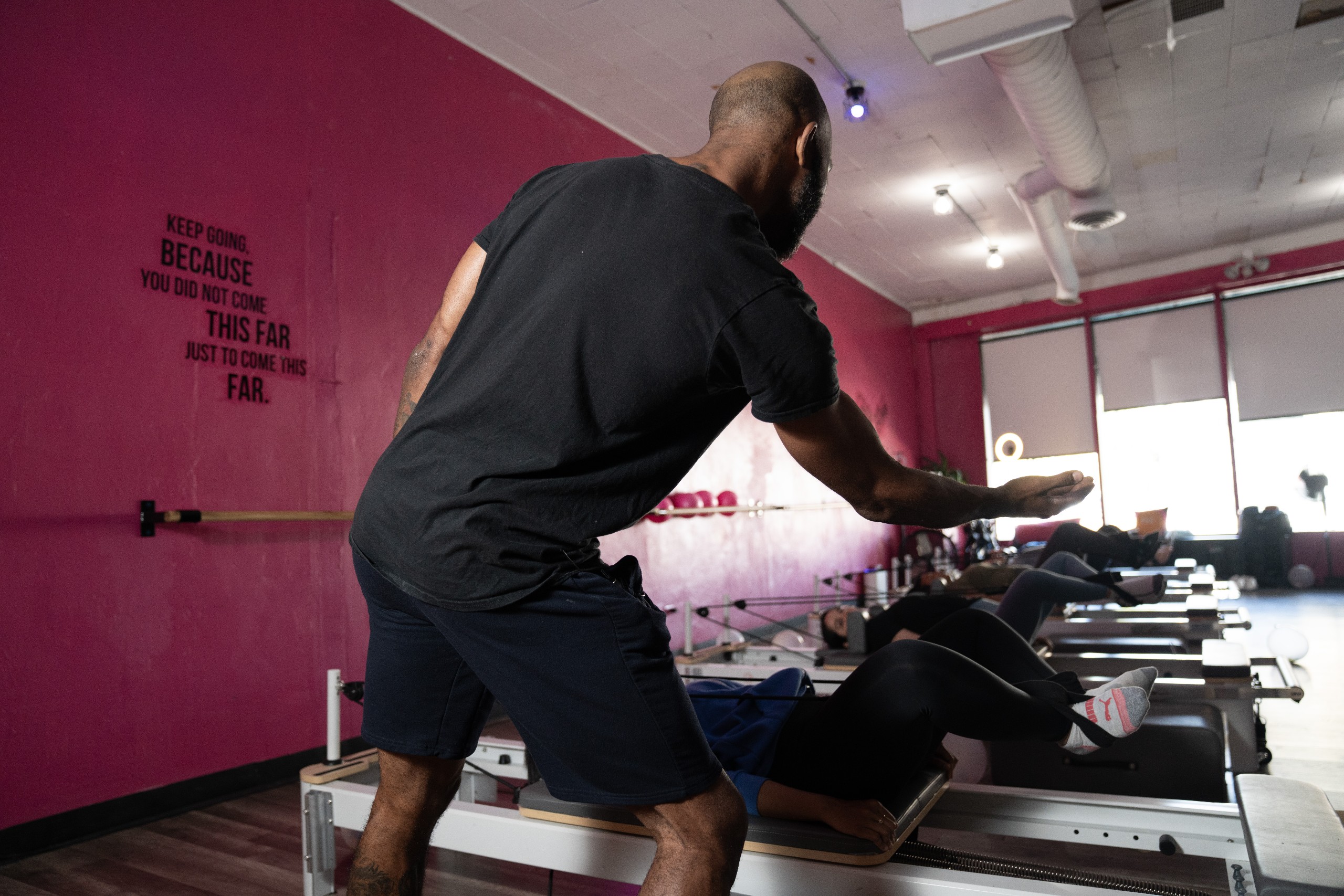
Johann instructing a Pilates Reformer class at Spin & Strength in San Jose, guiding clients through controlled movements for core strength, flexibility, and posture improvement. San Jose is emerging as a thriving center for Pilates, with more people embracing its benefits for strength, flexibility, and posture improvement. Pilates reformer exercises provide an accessible way for beginners to develop core strength and body awareness while minimizing joint stress.
As a low-impact yet highly effective workout, Pilates Reformer training is perfect for those looking to enhance their fitness without the strain of high-impact movements. Whether you’re recovering from an injury or seeking a new way to build functional strength, reformer exercises help improve control, stability, and coordination.
This guide introduces five essential Pilates reformer exercises tailored for beginners. These movements focus on building a strong foundation, enhancing mobility, and developing core control, all while being accessible to people of all fitness levels. Let’s dive into the top exercises that will kickstart your Pilates journey in San Jose.
1. Footwork on the Reformer
Purpose:
This foundational exercise strengthens the legs, glutes, and core while helping beginners develop proper alignment and control.
How to Perform:
Lie on your back with your feet on the foot bar, knees bent.
Press through your heels to straighten your legs while keeping your core engaged.
Slowly return to the starting position with control.
Perform 10–15 repetitions to build endurance.
Common Mistakes:
Overextending the knees – Keep a slight bend to avoid joint strain.
Relying on momentum – Focus on controlled movements for maximum benefit.
Pro Tip:
Try different foot positions (heels together, toes apart) to target different muscles, including the inner thighs and calves.
Benefits:
✔ Strengthens lower body muscles ✔ Improves spinal alignment and stability ✔ Builds endurance with low-impact movement
2. The Hundred
Purpose:
A classic Pilates exercise designed to build core strength, endurance, and breath control.
How to Perform:
Lie on your back with your legs in a tabletop position or extended at a 45-degree angle.
Lift your head, neck, and shoulders while reaching your arms toward your feet.
Pump your arms up and down while inhaling for five counts and exhaling for five counts.
Complete ten breath cycles (100 beats).
Common Mistakes:
Tensing the neck – Keep your head supported by engaging your core.
Holding your breath – Maintain steady, controlled breathing.
Pro Tip:
Modify by keeping your feet on the carriage if you feel strain in your lower back.
Benefits:
✔ Engages and strengthens deep core muscles ✔ Improves breathing control and endurance ✔ Enhances circulation and warms up the body
3. Leg Circles
Purpose:
This exercise enhances hip mobility, flexibility, and core stability.
How to Perform:
Lie on your back and place your feet in the straps.
Extend your legs to the ceiling, then begin drawing controlled circles with your legs.
Complete 5–10 circles in each direction.
Common Mistakes:
Overarching the lower back – Keep your core engaged.
Losing control – Perform slow, intentional movements to avoid straining the hips.
Pro Tip:
Keep the circles small at first and gradually increase range as flexibility improves.
Benefits:
✔ Improves hip flexibility and range of motion ✔ Strengthens core stability and pelvic control ✔ Helps with coordination and balance
4. Seated Arm Presses
Purpose:
Strengthens the upper body, including the shoulders, arms, and upper back, while reinforcing good posture.
How to Perform:
Sit tall on the carriage with a neutral spine.
Hold onto the straps with a slight bend in the elbows.
Press your arms forward, keeping shoulders relaxed.
Slowly return to the starting position.
Perform 10–12 repetitions.
Common Mistakes:
Shrugging shoulders – Keep them down and engaged.
Leaning forward – Maintain a straight, upright posture.
Pro Tip:
Engage your core throughout to avoid arching the lower back.
Benefits:
✔ Improves shoulder stability and strength ✔ Reinforces postural alignment ✔ Builds control over upper body movements
5. Bridging on the Reformer
Purpose:
Targets the glutes, hamstrings, and lower back, promoting spinal mobility and strength.
How to Perform:
Lie on your back with your feet on the foot bar, knees bent.
Engage your glutes and lift your hips toward the ceiling.
Slowly lower back down with control.
Repeat 10–12 times.
Common Mistakes:
Arching the lower back excessively – Engage the core to keep the movement controlled.
Relying on momentum – Lift and lower slowly for best results.
Pro Tip:
Add pulses at the top of the bridge to further engage the glutes and hamstrings.
Benefits:
✔ Strengthens posterior chain muscles ✔ Enhances spinal flexibility and mobility ✔ Engages the core for better balance
Pilates Reformer students at Pacific Spin & Strength in San Jose mastering stability and control during a dynamic full-body workout session, led by Johann. Exercise Summary Table
Exercise Target Muscles Key Benefit Footwork on the Reformer Legs, Glutes, Core Strengthens lower body The Hundred Core, Shoulders Improves core endurance Leg Circles Hips, Core Enhances flexibility & stability Seated Arm Presses Arms, Upper Back Builds upper body strength Bridging on the Reformer Glutes, Hamstrings Improves posture & spine health In Closing…
Pilates reformer exercises are a fantastic way for beginners in San Jose to build strength, flexibility, and body awareness while also gaining confidence in movement. These exercises help develop proper alignment, core stability, and functional mobility, making them ideal for anyone looking to improve their overall fitness.
With consistent practice, Pilates reformer workouts can enhance posture, alleviate muscle imbalances, and strengthen key stabilizing muscles that contribute to better movement patterns. Whether your goal is to tone your body, prevent injuries, or increase mobility, these five foundational exercises will help you establish a solid base.
San Jose’s thriving Pilates community makes it easy to find classes tailored to beginners, ensuring you receive expert guidance and support as you embark on your fitness journey. By integrating reformer exercises into your routine, you’ll experience the benefits of controlled, mindful movement that fosters both strength and relaxation.
No matter your starting point, these exercises provide an accessible way to build a stronger, more resilient body. Whether you’re recovering from an injury or simply looking for a new challenge, Pilates reformer workouts offer a balanced and effective approach to fitness. Try these essential movements to take your first step towards better movement and long-term wellness.
Ready to experience the benefits firsthand? Book a session at Spin & Strength today and take your first step toward a stronger, more flexible body!
Click here to sign up for a Pilates Reformer class in San Jose!
Please share on socials:
FAQ Section
Beginners should aim for 2–3 sessions per week to build strength, improve flexibility, and develop proper technique.
Yes! Pilates reformer exercises strengthen the core and improve spinal alignment, which can help reduce back pain and prevent future issues.
Not at all! Pilates helps improve flexibility over time, making it perfect for beginners with limited mobility.
While Pilates primarily builds strength and muscle tone, it can aid in weight loss when combined with a healthy diet and cardio exercises.You can book a session at Spin & Strength, San Jose’s top-rated Pilates and fitness center!
Resources
coachjohanncscs.com only uses primary research and scholarly studies as references over secondary sites. Other references are primarily from reputable social media accounts of experts only in the fields of health, nutrition, sports science, physiology, psychology, and physical therapy.