Category: Mindset / Motivation

  • How Working Hard Can KILL Us | Overwork Symptoms and Prevention!

    How Working Hard Can KILL Us | Overwork Symptoms and Prevention!

    [vc_row][vc_column][vc_column_text]

    How Working Hard Can KILL Us | Stop with the Stress Already!

    Working Hard Can Kill Us or it can heal us.

    Tyson was one my most dedicated trainees for years.

    When we first met, I knew nothing of his rebellious spirit. Checkered button-ups and semi-conspicuous name-tags on lanyards hide such things away from others.

    All I knew then was Tyson worked at Amazon – maybe all too hard – and that he wanted to get ripped.

    Before our two years were through however, I would learn from Tyson how working hard can kill us if we let it, or redeem us if we try.

    If it seems like hyperbole, know Tyson willed and worked himself to the bone to prove how normal it is to work hard for real autonomy.

    Inside the weight room, he set high goals and detailed them with precision.

    We knew his strength-ratio and what percentages we wanted to hit for each training day. We attacked these benchmarks every time out. Sometimes though rarely, Tyson was battling sleep deprivation and its ugly second cousin, cigarette addiction.

    At work, the project manager juggled handfuls of different personalities and projects at the notoriously demanding tech Goliath.

    He maintained constant “on-call” status too.

    The details of his actual work were never brought up by Tyson but I always knew when a new Amazon project would take shape in the Bay Area consciousness. My guess is he never divulged any clandestine industry-spoilers with me. But, being on call set him up with a healthy salary with which he supported a growing family.

    What was never arcane was his work ethic. The guy worked tirelessly in the weight room.

    A few weeks before he would leave California for good, Tyson attempted the largest lift of his life. We and prepped this moment for months, probably for years.

    He approached a grounded barbell and with years of dedication and technique imbibed within. He gripped the cold iron and ripped three hundred plus pounds of rubber and iron from Earth. There it levitated. As he pressed his knees to straighten, the barbell rattled a million tiny but violent muscular impulses dedicated to a singular task.

    He locked his back straight into a good lift.

    Then, he planted the iron fast and all the room’s drywall shuddered as the barbell rocked the floor. He let loose a “Fuck yeah!”

    I guess I expected more decorum and less effort from one of Amazon’s lieutenants.

    But I loved it. Every earth-shuddering second. He hit is final goal, just in time for him to leave his old stomping grounds.

    Every one of my trainees have unique characteristics but few share a self-imposed resentment against “the grind.”

    It comes to no surprise that Jeffery Pheffer of Stanford in a 2018 interview in The Economist states,

    “Second, employers affect the stress-inducing conditions of work: work-family conflict, long work hours, absence of control over one’s work environment, and economic insecurity. Stress makes people sick both directly and by inducing unhealthy individual behaviours such as smoking, drinking, and overeating.”


    Coaches are aware of how working hard can kill us because we get those who care about the balance in their lives. Personally, I believe the greatest way to actively help someone is to teach them to get in shape, workout with them or introduce them to fitness. Tyson, was more trainer than trainee.

    He always had a sense of balance and how much he longed for more. He wanted more time with his family, friends and; less time punching holes in his keyboard while becoming more aware of how sneaky clickbait actually shapes our psychology.

    One day, the sleep deprived Tyson finished a listless workout with me.

    Perturbed, he talked about bettering his nutrition.

    Tyson was beat – helping his wife with the newborn as he was returning to work from paternity leave was killing him. Tyson, who rarely canceled sessions, aggressively searched for answers. He asked:

    How to maintain high energy levels when he had no time for meals.

    What to snack on.

    He told me how his department handled “snacking.”

    Tyson mentioned that there were bowls of treats, trail mix and candies everywhere. That, if you were hungry, you need only extend your malnourished arm omnidirectionally and end up with a hundred calories of saccharin satiety.

    When meeting-times approached, some designated harbinger of glycemic overdose would call out for the local chain restaurant caterer to fill empty bellies in a hurry. I confirmed his thoughts and explained he would have to manage his environment, plan ahead and let his stomach growl a bit – essentially only eat when he was actually hungry; right before his body was about to go catabolic.

    Fed-up, the perspicacious Tyson agreed.

    “Fat and complacent,” according to the triggered Tyson is how these companies want their employees to be, “…they want everyone fat and complacent.”

    A woke statement…

    His idiom stole from my very tongue.

    Because he was probably right. But, he worked at a huge company. He was on the inside. This makes his observation more Meta, more factual because we both can agree on its premise only he knows it to be true, standard operational format.

    Fattening complacency was just something you charged to the game.

    Such nutrition habits are the cornerstones of exhaustion, fatigue, sleep deprivation and ultimately, bad habits.

    Pheffer continues:

    “When people are suffering, they use drugs. Prescription drug use of various psychotropics such as antidepressants, sleeping pills, and ADHD medications to improve concentration can highlight workplaces, including work units and supervisors, that are adversely affecting people’s health.”

    Some people drink a lot, and some smoke a lot. Many of my trainees do not. They overeat.

    This is human.

    But we can do something about it. But first, we should identify how working hard can kill us if we get too complacent.


    Typically I notice a few steps. We often:

    1. lose sleep because of a deadline, too many meetings or too much traveling
    2. skip meals because our deprived state makes our appetite stunted
    3. lose energy
    4. get more dehydrated
    5. So, all of this builds stress, physical and emotional, which becomes a cycle.

    According to Harvard Business Review in 2015, America has the least amount of vacation days per year among the industrialized world. And, I do understand that you must work!

    Remember, the biggest red flag to look for is sleep deprivation.

    Begin deprived of sleep raises leptin levels and makes us more oblivious to hunger sensations. Over time, this get also assist in out raising of fat storage.

    When we lose sleep, we crave sugar from my personal and anecdotal experience from training hundreds of people over 15 years. Snacking is a positive move for boosting our metabolism when trying to lose weight but snacking in concert with extreme lethargy yields a break in a natural hunger pattern.

    We stop responding to what we eat and only concern ourselves with what is nearby and easy to consume.

    Stay hydrated – your body craves water more than food.

    Staying hydrated is important simple because regulating your blood volume and thirst allows form proper metabolism throughout your body. Snacking unconsciously might not destroy your fitness goals and assist in weight loss unless you are snacking uncontrollably while succumbing to a newly suppressed metabolism.

    Drink your water, do so daily, at the same times of day.

    Relive stress by going out of your way.

    Do things that give you joy. One of the key results of the ABC for change models have everything to do with that C – the consequence. Making yourself feel good should be the goal. Smoking many a cigarette or swiping through your phone is so temporary a good feel it’s ridiculous.

    Instead set your intention to simply want to “feel better when I am doing (this)”

    Become aware and change your habits with action.[/vc_column_text][/vc_column][/vc_row]

  • Smoking and Exercise: Balancing the Habit and Your Health
    Smoking and Exercise: Balancing the Habit and Your Health

    Killing Yourself to Live: Smoking and Exercise

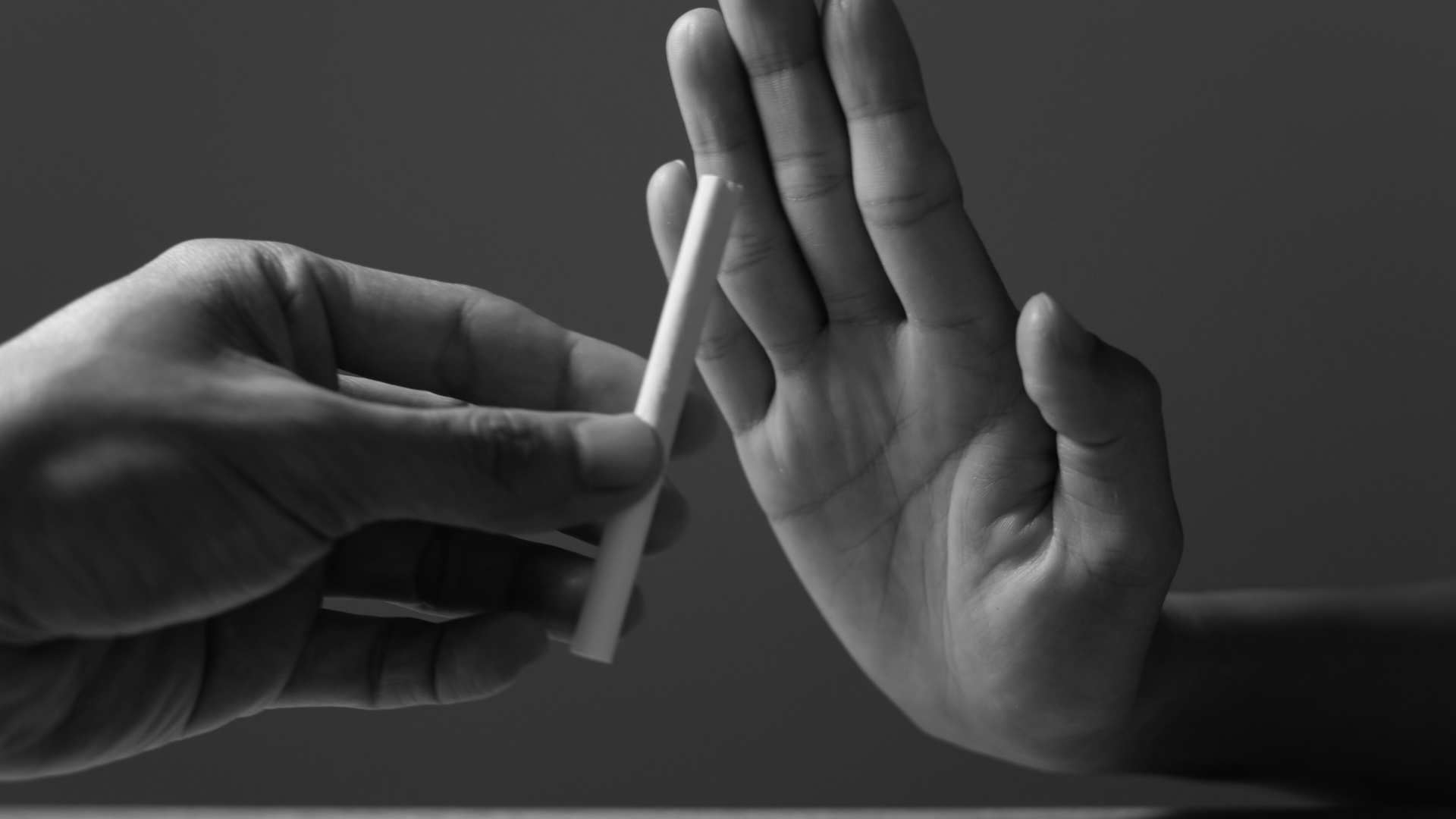
    A determined individual rejects a cigarette, symbolizing the decision to quit smoking for better lung health and endurance in fitness.
    Fighter performing high-intensity boxing drills to increase power, speed, and endurance for peak performance.

    Smoking has long been associated with devastating health consequences—from lung disease to cardiovascular issues—and yet, for many, it remains a deeply ingrained habit. But what happens when you’re someone who smokes and works out? The juxtaposition of harming your body while striving for physical fitness creates a complex narrative. For those who find solace in exercise while struggling to quit smoking, the tension between these two opposing forces can feel overwhelming.

    In this post, we’ll dive into the personal experience of balancing smoking and fitness, explore the science behind how smoking affects your body’s ability to perform, and offer actionable strategies for overcoming this challenge. By the end, you’ll understand why it’s never too late to reclaim your health and break free from the cycle of “killing yourself to live.”

    Balancing Smoke and Sweat

    Journey with me into the psyche of a fitness-minded cigarette smoker for a bit.

    Every morning, you pry your heavy eyelids open and the crust rolls anyway from your soggy marbles. You take your first real inhale of crisp air in and your airways rip apart as the air rushes through the narrowed highway.

    Instantly, the rush of the morning’s first breathe turns to a souring burning on the crevices on your sticky tongue. You test your tongue’s tensile strength against your jaw line, rubbing it against the familiar taste that was there the night before.

    You’re hungry, your stomach moans with a pleasant reminder, and it’s a workout day – you’ll be planning a hearty breakfast.

    Slightly below the surface though, a small battering ram is manned by a thousand tiny barbarians, slamming against the high walls of your encamped amygdala. The siege is on. You feel like you’re forgetting something. Before you know it, you’ve located, via smoker’s echolocation, your cigarettes and lighter. You’ll light up before you’ve spoken a word.

    And, the nicotine enters the busted walls of the city with light speed velocities. The seine is over and it feels kinda good. An hour later, this will happen, every hour until you can quit. It’s an ongoing war. I have had many trainees and clients who engage in smoking and exercise over the years.

    Smoking and Exercise are coping Mechanisms

    Instead of thinking of exercise as coping, you should focus on the things that you happy to workout.

    Your family encouragement, your long term health, the relief of endorphins, the freedom you get in gym: these are reasons most of my clients decide to change their lives and workout.

    A struggling athlete deals with fatigue and withdrawal symptoms, showing the physical impact of smoking on endurance, mental clarity, and energy levels.
    A struggling athlete deals with fatigue and withdrawal symptoms, showing the physical impact of smoking on endurance, mental clarity, and energy levels.

    When exercise becomes a way to cope, we get stuck in a vicious cycle. And smoking cigarettes is a vicious cycles – maybe THE vicious-est cycle! But, that’s all it is.

    Alan Carr, in his book, wrote about smoking: (we) only smoke a cigarette because of the withdrawal we feel makes us want to smoke another one. That’s it – smoking cigarettes is only A THING because it is A THING. In other words, it is only that we smoke them, that you need to smoke them, and not because of stress or otherwise. Inside your body, smoking increases your dopamine and makes you feel stimulated for a while.

    Carr says that it takes seconds, less than 5, for nicotine to reach your dopamine deprived brain. That’s the fastest delivery of a substance in existence. And, it feels good. But, you are engaging in a vicious cycle within. Inside your psyche, you are rewarding yourself and that buzz you get is a comforting feeling. You are artificially fulfilling it.

    The alternative is in fact doing nothing: but realizing that doesn’t feel good or feel any kind of way to do nothing, makes smokers smoke again, fulfilling Carr’s conjectures.

    The Science: How Smoking Impacts Exercise

    Cardiovascular System

    A visualization of how nicotine restricts blood flow, reducing oxygen delivery to muscles, impairing endurance, and increasing cardiovascular strain.
    Nicotine restricts blood flow, reducing oxygen delivery to muscles, impairing endurance, and increasing cardiovascular strain.

    Smoking severely limits your cardiovascular capacity. Nicotine constricts blood vessels, reducing oxygen delivery to your muscles during workouts. This means your heart has to work harder, leading to quicker fatigue and diminished performance.

    • Example: A study published in the European Heart Journal found that smokers have a 30% lower VO2 max compared to non-smokers, directly affecting endurance.
    • Takeaway: The less oxygen your muscles receive, the harder every rep, run, or sparring session becomes.

    Recovery and Muscle Growth

    Smoking increases inflammation and reduces your body’s ability to repair tissue. After intense exercise, your muscles need nutrients and oxygen to recover and grow—two processes that smoking directly hampers.

    • Example: A 2018 study showed that smokers produce less collagen, a protein essential for tissue repair and joint health.
    • Takeaway: Delayed recovery can lead to prolonged soreness, higher injury risk, and slower progress.

    Lung Function

    Your lungs’ ability to take in and utilize oxygen diminishes with every cigarette. Over time, this impacts aerobic capacity and even basic activities like climbing stairs or walking long distances.

    Takeaway: Compromised lung function makes high-intensity workouts nearly impossible, limiting your potential for growth.

    Breaking Free: Strategies for Quitting While Staying Active

    Find a Strong “Why”

    Your reason for quitting has to outweigh your desire to smoke. Psychologically, this is known as finding your “intrinsic motivation,” a deeply personal reason that drives change from within. For many, the motivation lies in being healthier for loved ones, improving athletic performance, or extending life expectancy. This sense of purpose can transform into actionable goals, like running a marathon or simply being present for family milestones.

    To start, consider journaling about why you smoke and what you stand to gain by quitting. Reflect on moments where smoking has interfered with your life—whether during workouts, social situations, or health scares. For some, hitting rock bottom, such as a significant health event, can serve as a wake-up call, but ideally, proactive introspection is enough to spark change. If journaling feels insufficient, seeking guidance from a therapist or a smoking cessation counselor can offer additional clarity and tools for change.

    • Action Step: Write down your “why” and revisit it daily. Place reminders in your gym bag or on your water bottle.


    Replace the Habit

    Exercise can serve as a powerful substitute for smoking. This process, known in psychology as “habit substitution,” involves replacing a harmful behavior with a beneficial one. The endorphin rush from physical activity not only combats withdrawal symptoms but also creates a positive feedback loop, reinforcing the new habit. For example, practicing deep breathing exercises like diaphragmatic breathing or box breathing can reduce stress and calm cravings. 

    Gamifying this process can further enhance motivation—set goals like completing a 30-day streak of workouts or earning points for every craving successfully managed with exercise. Over time, incorporating long-term fitness habits such as regular strength training or cardio sessions can solidify this new behavior as a permanent replacement. These activities also provide structure and measurable progress, making it easier to stay committed.


    Leverage Support Systems

    Surrounding yourself with supportive friends, family, or a fitness community can make quitting easier. Psychologically, this is referred to as “social reinforcement,” where encouragement from others boosts your motivation and accountability. Fitness communities, in particular, provide a shared environment where you can celebrate milestones and gain inspiration from others on similar journeys.

    For example, joining a local running club or group fitness class can offer camaraderie and keep you focused on healthier habits. Additionally, accountability partners—whether a friend, family member, or coach—can regularly check in on your progress and provide practical support during challenging moments. Social media groups or online forums can also serve as virtual support systems, connecting you with others who share your goals.

    • Action Step: Join a smoking cessation program, participate in group workouts, or engage with online fitness communities to build a robust support network.


    Use Gradual Reduction Techniques

    Quitting cold turkey isn’t for everyone. This approach often requires immense willpower, which can be overwhelming for many. Gradually reducing your cigarette intake while simultaneously increasing exercise intensity creates a manageable pathway to quitting. This is often referred to as “titration,” a method of slowly decreasing dependency while introducing healthier habits.

    For instance, you might start by replacing one cigarette per day with a brisk walk or a 5-minute meditation session. Gradually, as your reliance on nicotine decreases, you can scale up these activities to include longer cardio sessions or structured strength training. Tracking your progress with a journal or an app can gamify the experience, providing motivation through measurable milestones. Additionally, incorporating mindful breathing exercises post-workout can reduce cravings and improve overall stress management, reinforcing your commitment to change.

    Action Step: Set weekly reduction goals. Pair this with a progressive workout program to channel your focus.

    A fit athlete tracks his workout performance using a smartwatch, highlighting the role of exercise in smoking cessation and cardiovascular improvement.
    A fit athlete tracks his workout performance using a smartwatch.

    Table: Smoking’s Impact on Fitness

    System/Function

    Impact of Smoking

    Fitness Implications

    Cardiovascular

    Reduced oxygen delivery to muscles

    Decreased endurance, faster fatigue

    Muscle Recovery

    Increased inflammation, reduced collagen production

    Slower recovery, higher injury risk

    Lung Function

    Decreased oxygen uptake and utilization

    Reduced aerobic capacity, difficulty with cardio

    Mental Focus

    Disrupted dopamine pathways

    Lower motivation, increased reliance on nicotine

    In Closing…

    Balancing smoking and exercise is a paradox that many struggle with. While the two seem incompatible, the drive to maintain fitness can serve as a powerful catalyst for quitting. By understanding the science behind how smoking impacts your body and implementing actionable strategies, you can break free from the cycle and achieve both health and fitness goals.

    Breaking the habit isn’t an overnight process, but it’s one of the most rewarding journeys you can undertake. Each small victory—whether skipping a cigarette or completing a workout—is a step toward a healthier, stronger you. Use exercise as your ally, lean on your support systems, and remember that every step forward—no matter how small—is progress. The path to living a healthier life starts today, and with consistent effort, the results will be life-changing.

    FAQ Section

    Yes, but progress will be slower, and your risk of injury and fatigue will remain higher compared to non-smokers. Quitting smoking will dramatically enhance your fitness potential.

    Cardiovascular improvements can begin within weeks, and lung function can start to rebound within three months. Muscle recovery and endurance improvements often follow shortly after.

    Nicotine replacement therapies like patches or gum can ease withdrawal symptoms. Pair these with a balanced diet rich in antioxidants to support recovery.

    While exercise still provides benefits, smoking significantly diminishes them by reducing oxygen capacity and slowing recovery.

    Cardiovascular activities like walking, cycling, and swimming can help rebuild lung function. Strength training is also beneficial for overall health and focus.

    Resources

    coachjohanncscs.com only uses primary research and scholarly studies as references over secondary sites. Other references are primarily from reputable social media accounts of experts only in the fields of health, nutrition, sports science, physiology, psychology, and physical therapy. 

    • Jeon, H. G., Kim, G., Jeong, H. S., & So, W. Y. (2021). Association between cigarette smoking and physical fitness level of Korean adults and the elderly. Healthcare, 9(2), 185.
      DOI: 10.3390/healthcare9020185

    • Ho, C. C., Lee, P. F., Xu, S., Hung, C. T., Su, Y. J., & Lin, C. F. (2022). Associations between cigarette smoking status and health-related physical fitness performance in male Taiwanese adults. Frontiers in Public Health.
      DOI: 10.3389/fpubh.2022.880572

    • Eroglu, H., & Yüksek, S. (2018). The effect of smoking on the physical fitness of elderly male subjects. Education Resources Information Center (ERIC).
      URL: https://eric.ed.gov/?id=EJ1181200

    • Hassandra, M., Goudas, M., & Theodorakis, Y. (2015). Exercise and smoking: A literature overview. Health, 7(11), 1625-1642.
      DOI: 10.4236/health.2015.711162

    • Bhatti, M. A. (2024). Impact of Exercise Benefits on Achievement-Enhancing HR Bundles: Role of Health Beliefs, Smoking Cessation and Smoking Urges. Journal of Natural Science, Biology, and Medicine.
      URL: https://jnsbm.org/menuscript/index.php/submissions/article/view/407/162

  • Subtle ways your diet habits stop healthy Living
    Subtle ways your diet habits stop healthy Living

    [vc_row][vc_column][/vc_column][/vc_row][vc_row][vc_column][vc_custom_heading text=”Your diet and its routine’s habits stop health lifestyles – not help!” font_container=”tag:h2|text_align:justify” use_theme_fonts=”yes”][vc_custom_heading text=”Habits of the mind shape your food choices.” font_container=”tag:h3|text_align:justify” use_theme_fonts=”yes”][vc_empty_space alter_height=”medium” hide_on_mobile=””][vc_column_text]

    [/vc_column_text][/vc_column][/vc_row][vc_row][vc_column][vc_empty_space hide_on_mobile=””][vc_video link=”https://youtu.be/dlMFIi-DY2w”][vc_empty_space alter_height=”large” hide_on_mobile=””][/vc_column][/vc_row][vc_row][vc_column][vc_column_text]Diets aren’t supposed to stop healthy habits.

    The opposite is supposed to happen – dieting, a routine should SUPPORT healthy living.

    That’s why we start them.

    As I’m getting with a lot of my trainees these days (quarantine at the time of writing), my guess is your eating is actually a lot better than you thought it would be. Am I right? You’re eating is a lot better than you thought it would be in the middle of a global pandemic that we’ve never seen before. Why might that be the case?

    You should be eating chef Boyardee.

    You should be like dousing everything and in sugar and salt, pounding sodas galore.

    Why aren’t we doing that? Why is it that you’re making the great changes now when you have more freedom, more time, less commutes?

    This is because of a cognitive dissonance to what it comes to dieting and now it’s time to get aware of it.

    Dieting for most of the people I’ve ever trained has always been this shortcut. It’s always been this convenience lifestyle choice that you’ve made that ultimately fails because it doesn’t work for anybody.


    Some habits stop healthy choices

    [/vc_column_text][vc_empty_space hide_on_mobile=””][/vc_column][/vc_row][vc_row][vc_column][vc_custom_heading text=”Case in Point” font_container=”tag:h2|font_size:30|text_align:justify” use_theme_fonts=”yes”][vc_row_inner][vc_column_inner width=”1/2″][trx_sc_skills type=”counter” filled=”” cutout=”” compact=”” color=”#ff0000″ back_color=”” border_color=”” max=”1500″ columns=”” values=”%5B%7B%22title%22%3A%22Sophia’s%20total%20BASE%20calories%22%2C%22value%22%3A%221500%22%2C%22color%22%3A%22%2381d742%22%2C%22icon_type%22%3A%22fontawesome%22%7D%5D” title_style=”default” title_align=”default” title=”” subtitle=”” description=”” link=”” link_text=”” link_image=”” id=”” class=”” css=””][trx_sc_skills type=”pie” filled=”” cutout=”” compact=”1″ color=”#ff0000″ back_color=”” border_color=”” max=”1500″ columns=”” values=”%5B%7B%22title%22%3A%22Carbs%20ON%20DIET%22%2C%22value%22%3A%22200%22%2C%22color%22%3A%22%23dd3333%22%2C%22icon_type%22%3A%22fontawesome%22%7D%2C%7B%22title%22%3A%22Total%20Calories%20%22%2C%22value%22%3A%221500%22%2C%22color%22%3A%22%2381d742%22%2C%22icon_type%22%3A%22fontawesome%22%7D%5D” title_style=”default” title_align=”default” title=”” subtitle=”” description=”” link=”” link_text=”” link_image=”” id=”” class=”” css=””][trx_sc_skills type=”pie” filled=”” cutout=”” compact=”1″ color=”#0300ed” back_color=”” border_color=”” max=”1500″ columns=”” values=”%5B%7B%22title%22%3A%22Carbs%20OFF%20Diet%22%2C%22value%22%3A%22750%22%2C%22color%22%3A%22%23333ce0%22%2C%22icon_type%22%3A%22fontawesome%22%7D%2C%7B%22title%22%3A%22Total%20Calories%20%22%2C%22value%22%3A%221500%22%2C%22color%22%3A%22%2381d742%22%2C%22icon_type%22%3A%22fontawesome%22%7D%5D” title_style=”default” title_align=”default” title=”” subtitle=”” description=”” link=”” link_text=”” link_image=”” id=”” class=”” css=””][/vc_column_inner][vc_column_inner width=”1/2″][vc_column_text]

    Sophia & diet free choices

    Seven or eight years ago, I had this very intractable trainee Sophia: she wants to compete.

    She’s a struggling amateur bodybuilder. She comes in ready to go. She’s got her  neon jug of BCAA’s and surreptioniously shoots some in between more ardous workout sets. She’s very strong, real smart, working out hard, but she can’t lose ANY WEIGHT!

    Sophia can’t lose weight. In fact, she shows me the year previous body fat test diets has me reach out to former trainers and still, cannot lose a pound. Why?

    She refuses to eat sugar or carbohydrates.

    Sophia’s eating zero carbohydrates per day for the longest – I can’t believe it.

    I’m instructing her like to eat more normally and to do it with a pattern, to eat sugar, to not be afraid of carbohydrates. After one or two weeks of finally getting this intractable Sophia to listen to me, she starts to eat fruits in the morning with her protein laden breakfasts and juice even before she works out.[/vc_column_text][/vc_column_inner][vc_column_inner][vc_column_text]

    diets are habits that stop healthy lifestyles

    And guess what?

    Sophia finally loses the first four pounds she’s lost in over a year. And it’s not because of my recommendations, they’re not different. It’s because we finally got to a point where I was able convince her that her diet was terrible, het diet was inhibitory, her diet was a bad habit not healthy living like she believed fully.

    I love bodybuilding and have known a bunch of bodybuilders my whole life – I respect the hell out of it. Most of them are doing that temporarily.

    So, unless you’re going straight to competition, you shouldn’t be out here skipping sugar and skipping carbohydrates left and right, and if you do, it should be very temporary and you should and you should have the idea of getting a trophy in your mind real soon.

    Just like I taught Sophia guys, break free of the pattern thinking in your eating that doesn’t get you to your goals. Now that we’re here and whenever we have the luxury of time thinking about how your diets have largely failed you and have caused you to eat within this constrained pattern.

    Notice how your eating patterns and diets have taken that away and how that’s actually like the anathema of getting more muscle, having a stronger leaner body, having full body awareness and control being injury free.

    All of that’s counter to a diet and hopefully guys, you take this time to dial that in and carry it with you![/vc_column_text][/vc_column_inner][/vc_row_inner][vc_row_inner][vc_column_inner][/vc_column_inner][/vc_row_inner][/vc_column][/vc_row]